
Exploring the impact of Vietnam War refugees on family medicine
The Richard D. Feldman, MD Student and Resident Essay Contest
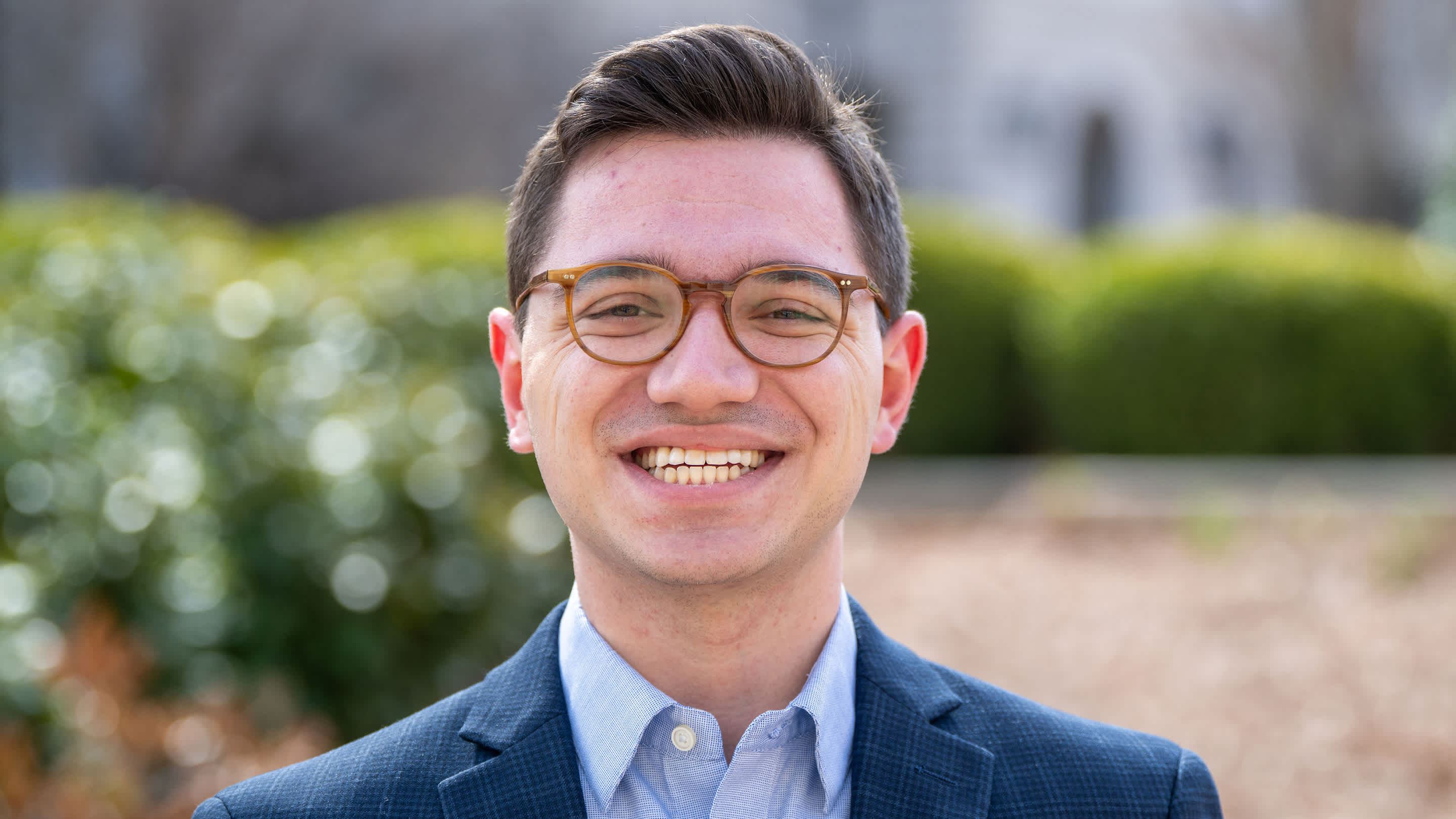
Sam Feudo
“There's no better way to complement your training than to look at what was done in the past, [and] what is happening now.” — Saverio “Sam” Feudo
Though he was destined for a career in health care — his dad is an internist and his mom is a nurse — Sam Feudo’s path to medical school took a detour into public policy.
“I grew up with deep interest in primary care, but also how that intersects with health administration,” he said. That interest took him from Ohio State to policy internships in Washington and a master’s in international health policy at the London School of Economics before he entered medical school.
Feudo is currently a third-year medical student at Thomas F. Frist, Jr. College of Medicine at Belmont University. He’s also the winner of the 2025 Richard D. Feldman, MD Student and Resident Essay Contest, sponsored by the AAFP Foundation’s Center for the History of Family Medicine (CHFM).
Drawing on his passion for writing and interest in primary care, along with his background in public policy, Feudo approached the contest as an opportunity to “tackle some maybe prickly issues.” Namely: primary care through the lens of immigration.
He was interested in how people come to see themselves as part of a shared community, and which institutions can still build trust across differences when society feels increasingly fragmented. “The history of refugee care gave me a very concrete way into that question,” Feudo said. “Family physicians were not only treating illness; they were helping people find their footing in unfamiliar communities and institutions, and showing how medicine can help turn strangers into neighbors.”
In his essay, Activist Roots: How the Care of Political Refugees Forged the Identity of Family Medicine, he explored how the refugee crises following the United States’ withdrawal from Vietnam became the proof of concept for family medicine — with lessons still relevant today:
“The young physicians who cared for Vietnamese, Cambodian, and Laotian refugees were not departing from their specialty’s mission; they were fulfilling it. They proved that medicine practiced at its fullest is inherently activist work: advocating for patients against systems designed to exclude them, building trust across chasms of language and trauma, creating infrastructure where none existed, translating suffering into policy change. Those models endure as blueprints for the crises America faces now: crises of belonging, of trust, of whether we can see ourselves as members of a shared body whose health depends on all its parts.”
The purpose of the CHFM’s annual essay contest is to encourage learning and promote scholarly discourse on themes tied to the history of family medicine in the United States.
One major takeaway for Feudo: “A lot of the challenges we face are not new. We had all these refugees coming over from Vietnam with illnesses we had never heard of, with conditions that we didn’t even have categories to define in our textbooks — whether it was PTSD or other conditions, physical and mental, that are certainly part of the whole.”
Feudo said his research into what refugees experienced in the 1970s and 1980s complemented his current medical training, underscoring the need for today’s family physicians to address both the clinical and psychosocial barriers to health — particularly in times of social and democratic discohesion.
Applications for the 2026 Richard D. Feldman, MD Student and Resident Essay Contest will be accepted from August 15 to November 1, 2026.