
A steppingstone on this family physician’s path of leadership and advocacy
Family medicine leads Emerging Leader Institute (ELI)
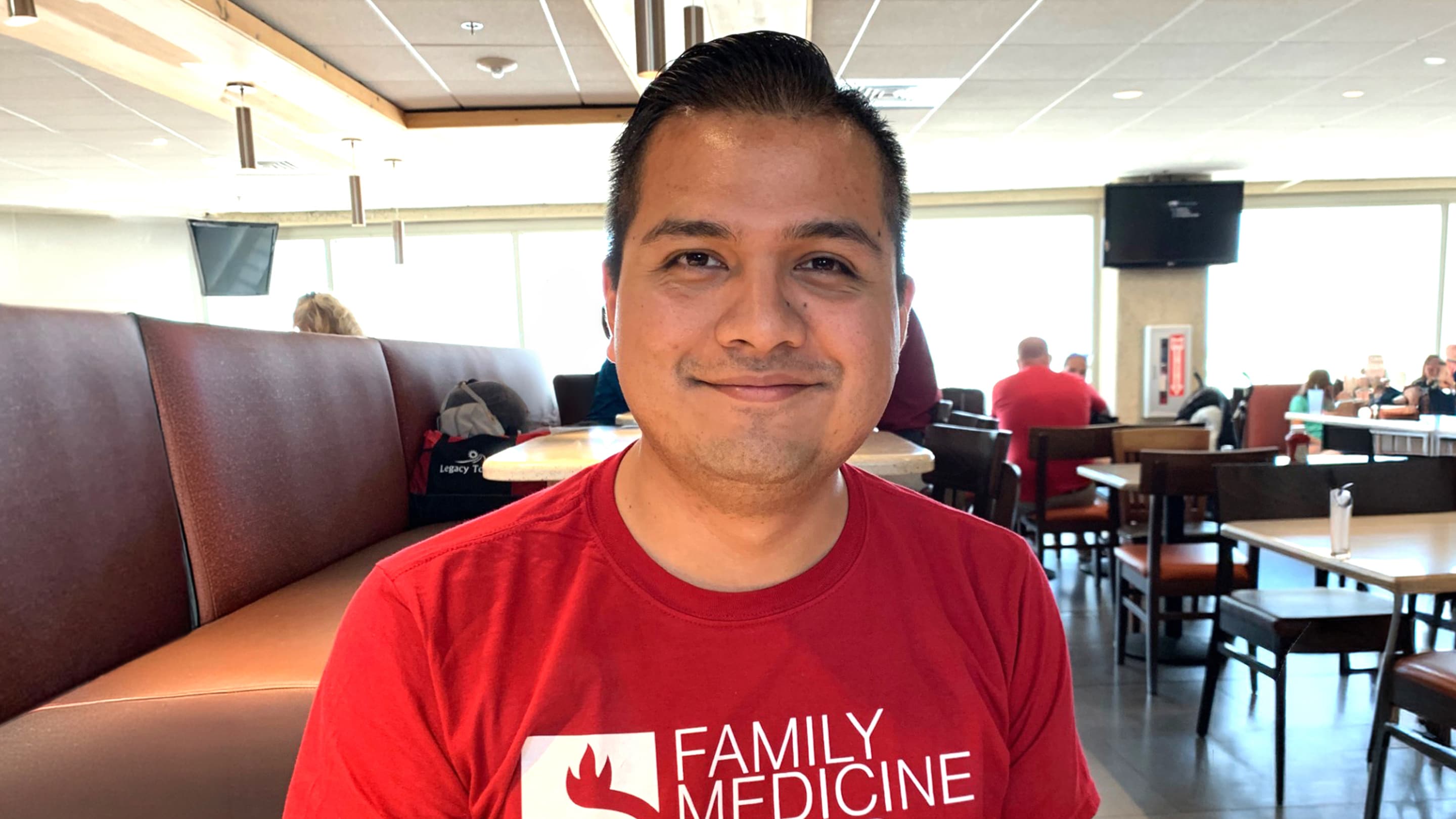
“I would not be where I am, were it not for the support of mentors,” said José Flores-Rodarte, MD, MPH, FAAFP, a family medicine physician at HealthPoint, a community clinic in Seattle, Wash. “And the existence of programs like ELI is one part of that structured mentorship.”
Flores-Rodarte was a 2019 ELI scholar, an experience he considers instrumental to his development as a leader and advocate.
Each year, the Emerging Leader Institute selects 30 residents and medical students to attend FUTURE (AAFP’s national conference) followed by two days of intensive workshops within a designated leadership track: Policy & Public Health, Personal & Practice or Philanthropic & Mission-Driven. Participants are paired with mentors who will help them develop and complete a project related to their track.
Flores-Rodarte demonstrated leadership qualities from a young age. Born in Mexico and raised in rural California, he was the first in his family to become a doctor or go to college, and forged his own path by seeking others to guide him along the way.
He was a computer science major at UC Irvine when he realized, “I want to work with people. I want to see more of an immediate positive impact.” He called an old high school friend and arranged to shadow his dad, a family physician.
Flores-Rodarte was captivated by everything, from the variety of daily work to the physician’s long-standing relationships with his patients. He recalled, “It felt good to be on the side of prevention and keeping people healthy.”
Flores-Rodarte earned his MD and Master of Public Health at Icahn School of Medicine at Mount Sinai in N.Y. Even before medical school, he knew he wanted to help underserved communities. He applied for a National Health Service Corps scholarship and continued job shadowing and volunteering, including translating for Spanish-speaking patients at a federally qualified health center — his way of paying it forward.
Approaching his second year of residency, Flores-Rodarte considered his interest in health policy and advocacy, along with his requirement to complete a quality improvement project at his clinic. ELI was an ideal opportunity to pursue both and to get further involved with the AAFP (he’d attended National Conference twice).
Flores-Rodarte was working at a Harborview Medical Center clinic in Seattle, part of the University of Washington (UW), serving a diverse, underserved community. “More than half of our visits were interpreted in other languages,” he said. He noticed that the EMR only printed patient care instructions in English and that non-English-speaking patients were confused by letters they’d receive informing them of test results.
For his ELI project under Policy & Public Health, he led an effort to create patient letter templates in several languages, including Spanish, Somali and Mandarin, using more nuanced translations than those previously attempted through Google Translate. The results were so effective that even after Flores-Rodarte left the clinic, his program was expanded to more languages and adopted across the UW health system.
Flores-Rodarte later became an ELI mentor, served on several AAFP commissions and got involved at the state level. “I'm now Secretary Treasurer of the Washington Academy of Family Physicians, after being a new physician trustee,” he said.
He credits ELI as a steppingstone, helping him “get my feet wet” in leadership and advocacy. “[It] got me exposed to the Academy’s workings and the incredible physicians that are part of it,” he said.